For overseas growth South Korea Station Group Elastic scaling and cost control of VPS servers require balancing performance, availability, and costs. This article provides actionable strategies from the perspectives of architecture, networking, automation, and operations, taking into account both SEO and GEO optimization needs to help technical and operations teams develop feasible plans.
When expanding to overseas users, the main challenges faced by the Korean VPS cluster include cross-border latency, bandwidth fluctuations, traffic peaks, and differences in regulatory compliance. It is necessary to plan in advance regarding server location, caching strategies, and routing optimization to ensure a good user experience and stable crawling by search engines.
Reducing latency is primarily achieved by combining nearby nodes with intelligent DNS and multi-region CDN to shorten the time for the first packet and the loading of static resources. It also uses compression, lazy loading of images, and request merging to reduce bandwidth usage, thereby improving page loading speeds and SEO performance for users overseas.
Elastic scaling should be based on stateless services, adopting a horizontal scaling-first strategy combined with automated scaling rules. Scale out/in by monitoring key metrics to ensure rapid response during traffic peaks and release resources during off-peak times to control costs.
Containerized deployment improves service consistency and startup speed, combined with CI/CD for rapid deployment and rollback. Container orchestration platforms facilitate unified management of instances across nodes in South Korea and overseas, supporting on-demand scaling and blue-green deployment to reduce operational risks.
An intelligent load balancer combined with regional strategies is used to direct user requests to the nearest or most performant node. Implement grayscale rules and session retention strategies for site cluster traffic to optimize the allocation between search engine crawlers and real user visits.
Properly configure CDN caching rules to distinguish between dynamic and static content, reducing pressure on the origin server and improving global access speeds. Using geographic routing and cache warming can improve SEO crawling efficiency, while reducing cross-border origin server costs and latency.
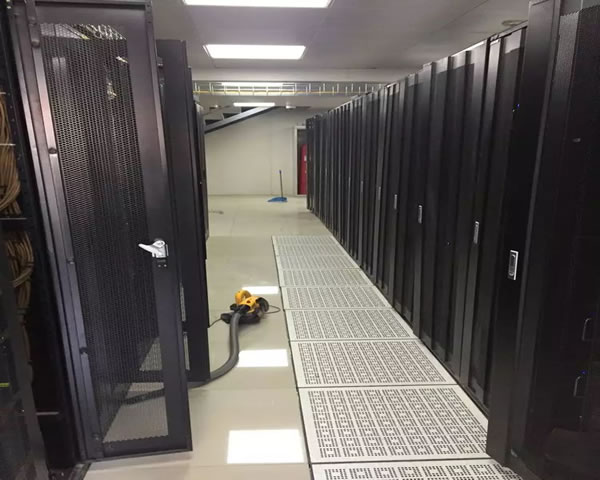
Cost control should focus on three aspects: instance specifications, elasticity policies, and resource utilization. By balancing instance types, automating scaling, improving cache hit rates, and managing lifecycles, it continuously reduces the cost per visitor while ensuring scalability for business growth.
Establish a monitoring system covering performance, capacity, and cost dimensions, using SLOs/SLIs to drive scaling strategies. Fine-grained alerts are triggered based on metrics, preventing unnecessary resource expansion due to human error and thereby improving return on investment and stability.
When expanding overseas, it is necessary to comply with local privacy and data sovereignty regulations, and properly plan the storage of user data and the paths for data retrieval. Compliant design not only reduces legal risks but also helps build trust in target markets and achieve more stable SEO rankings.
The technical implementation must support multiple languages, hreflang tags, geolocated content delivery, and an optimal server layout to help search engines correctly identify regional targets. Stable response times and high availability are the fundamental guarantees for SEO rankings and user retention.
For the elastic scaling and cost control of Korean website clusters’ VPS servers aimed at overseas growth, coordinated optimization in architecture, networking, automation, and compliance is required. It is recommended to first establish an observability platform and elastic strategy templates, gradually conduct A/B testing in different markets, and continuously use data-driven decisions for scaling up and cost reduction, to ensure that overseas expansion remains sustainable and competitive.
- Latest articles
- Popular tags
-

Evaluating The Impact Of Server Rental In South Korea And The United States On Search Visibility From An Seo Perspective
from an seo perspective, we evaluate the impact of server rental in south korea and the united states on search visibility, covering key points such as geographical delay, ip distribution, content localization, cdn cooperation, security and stability, and give practical suggestions. -

From The Airline’s Perspective: Challenges And Opportunities Ahead For These Servers On Airplanes Before They Become Commercially Viable
From an airline’s perspective, it analyzes the technical, operational, compliance, and commercialization challenges of servers on aircraft prior to their commercial use. It also proposes feasible solutions such as phased pilots, zonal security, and edge deployment to help improve passenger experience and operational efficiency. -

Explore The Market And Service Options Of Korean Native Ip
this article explores the market status and service options of korean native ip to help readers understand how to effectively utilize korean original content.